How Long Does SEO Take? What to Expect in Months 1, 3 and 6
People ask how long SEO takes because they want to know when it will pay off. The honest answer is that it depends, but it is not a mystery. SEO follows a fairly predictable pattern, and there are clear signs you can watch long before rankings move.
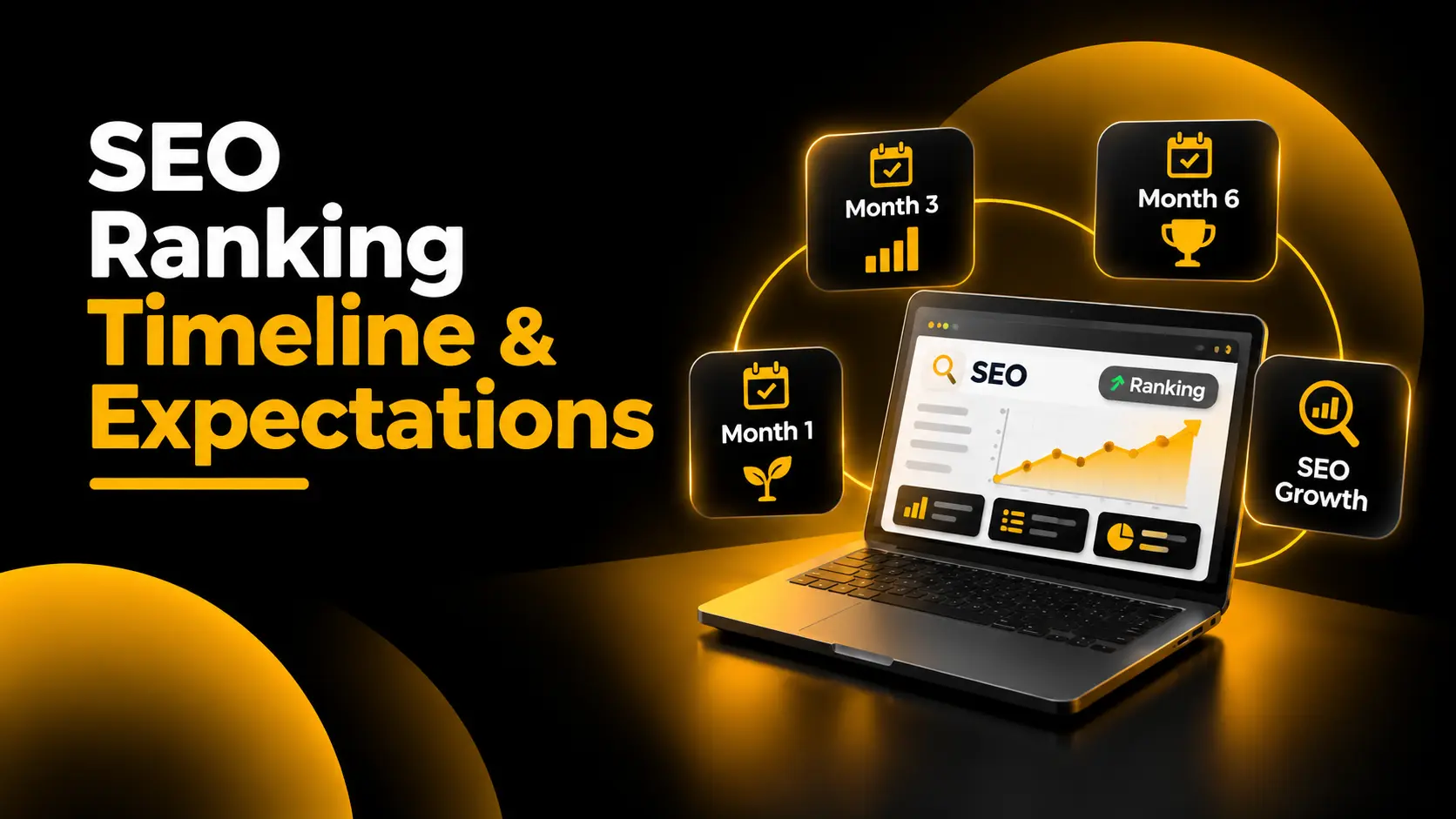
The short answer: SEO usually shows early signs, such as more indexed pages and rising impressions, within the first 4 to 8 weeks. Meaningful traffic and enquiries typically build between months 3 and 6, with bigger gains over 6 to 12 months. Timing depends on competition, your site's age and how much you fix and publish. No one can guarantee a date.
This guide walks through what usually happens in months 1, 3, 6 and 12, what to do at each stage, how to tell SEO is working early, and what slows results down. It also includes real numbers from the first weeks of my own website.
The SEO timeline at a glance
These are typical ranges, not rules. Competitive keywords and brand-new websites usually sit at the slower end.
| When | What usually happens | What you can measure |
|---|---|---|
| Month 1 | The site is audited and fixed. Google crawls and indexes your pages. Few or no rankings yet. | Pages indexed, errors fixed, baseline numbers |
| Months 2 to 3 | Impressions begin to rise. Pages appear for long, specific searches, often far down the results. First small clicks. | Impressions, queries, average position |
| Months 4 to 6 | Pages that match what people want start reaching the first pages for less competitive searches. Clicks grow steadily. First enquiries from search. | Clicks, rankings for target keywords, enquiries from search |
| Months 7 to 12 | Results compound. More pages rank, harder keywords become realistic, and traffic is steadier. | Enquiries, leads, share of traffic from search |
What decides how long SEO takes?
Two websites can do the same work and see different timelines. These are the main reasons.
- Competition. A search term that many strong sites target takes far longer than a specific, less competitive one.
- Site age and trust. A new website starts with no history. Older sites with a record of useful pages usually move faster.
- Technical health. If pages are not indexed, load slowly on phones or have broken links, little else matters until those are fixed.
- Content quality. Pages that answer the search clearly, with original examples, tend to do better than thin or copied pages.
- Links and mentions. Other relevant sites and profiles referring to you add trust, and these build slowly.
- Consistency. A site that keeps publishing and improving pages moves faster than one that is set up once and left alone.
- Search demand. Searches with little demand give small numbers even when you rank well, so judge progress against realistic volumes.
What to do at each stage
Month 1: Fix the foundation and record a baseline
Start by finding out what is wrong. Run an audit, fix indexing, broken links, weak titles and slow pages, and submit your sitemap in Search Console. My SEO audit checklist walks through each step with free tools. Before you change anything, write down your starting numbers (pages indexed, impressions, clicks). Without a baseline you cannot show progress later.
Do not expect rankings yet. This month is about making sure Google can find and understand your site.
Months 2 to 3: Publish, then improve what Google already shows
Publish useful pages and posts on a regular schedule, each aimed at one clear search. Then open Search Console and look for pages that get impressions but few clicks. Those need a better title or description. Add links between related pages so Google and visitors can move through the site.
Most of the movement in this period is small and easy to miss. Watch impressions and the list of queries, not just clicks.
Months 4 to 6: Strengthen what is working
By now your better pages should be moving up for less competitive searches. Double down on them: add depth, real examples and clear proof, and link to them from other pages. This is also when the first enquiries from search tend to appear.
If you need leads sooner than SEO can deliver them, paid ads can bring enquiries while SEO builds. They do not speed SEO up, but they fill the gap. SEO is one part of a wider plan, as explained in why digital marketing is a strategy, not just a collection of channels.
Months 7 to 12: Expand and refresh
With a base in place, you can target harder keywords, build topic clusters and refresh older posts. Review which pages bring enquiries, not just visits, and put more effort there.
How to tell SEO is working before rankings move
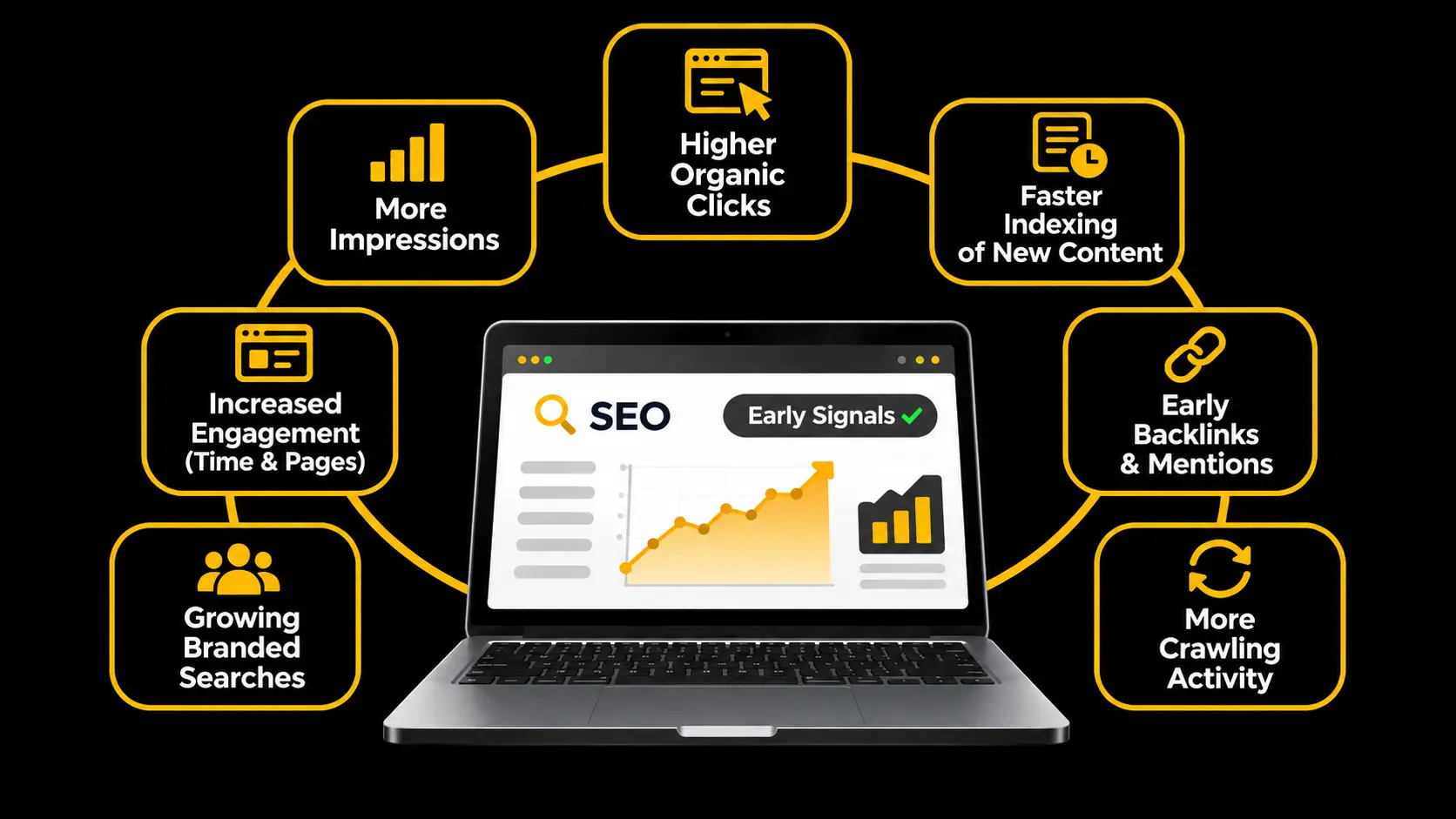
Rankings are the last thing to change. These earlier signs tell you the work is having an effect:
- More pages indexed. The Pages report in Search Console shows more of your important pages in Google.
- Impressions rising. Your pages appear in more searches, week over week, even if few people click yet.
- New queries appearing. Search Console lists more searches that show your site, especially longer, specific ones.
- Average position improving for the pages you are targeting.
- Click-through rate improving after you rewrite titles and descriptions.
- Searches for your brand name growing as more people hear of you.
- First enquiries or WhatsApp clicks coming from search.
What slows SEO down, and what can speed it up
Common things that slow it down:
- Important pages that are not indexed, or are blocked by robots.txt or a stray noindex tag.
- Thin, copied or overlapping pages that do not clearly answer a search.
- Aiming at very competitive keywords first instead of specific ones you can win.
- Slow mobile loading and broken links. Why your website is the foundation of every marketing channel matters here, because SEO cannot make up for a weak site.
- Changing titles, URLs and page structure over and over, so Google never sees a stable page.
- Stopping at month 2 because rankings have not moved yet.
What can speed it up:
- Fix the basics first (indexing, speed, titles, broken links).
- Start with specific, lower-competition searches and work up.
- Match what people actually want from each search.
- Link related pages to each other.
- Publish and improve consistently, rather than in bursts.
- Rewrite titles on pages that get impressions but few clicks.
Nothing here makes SEO instant. It simply stops you losing time on avoidable problems.
Real data: the first weeks of my own website
A new website starts with no history, so its first weeks are a fair test of the timeline above. Here is what Search Console showed for nmirshad.com after launch.
| Week | Pages indexed | Total impressions so far | Total clicks so far | What I did |
|---|---|---|---|---|
| Week 1 (launch: September 10, 2026) | 0 | 0 | 0 | Ran an SEO audit and found gaps in the initial SEO setup |
| Week 2 | 5 | Under 200 | 0 | Started off-page SEO |
| Week 4 | 10 | 1.41K | 40 | Planned a 12-week content strategy |
| Week 6 | 16 | 2.82K | 88 | Focused on moving more pages onto the first page of Google |
| Week 8 | 16 | 4.11K | 129 | Ran another SEO audit and analysed Search Console data to find more search queries |
What this shows: Search Console showed no impressions in week 1. Impressions appeared in week 2, reached 1.41K by week 4 and 4.11K by week 8, while clicks grew from 0 to 129 and indexed pages from 0 to 16. Impressions kept growing even though no new pages were indexed, as the existing pages appeared for more searches. This is one new site, so treat it as an example, not a promise.
Does AI search change the timeline?
Not in the way many people expect. Google says there are no additional requirements to appear in AI Overviews or AI Mode, and no special optimization or markup is needed. A page must be indexed and eligible to show in Search with a snippet, and the usual SEO fundamentals apply. You can read the details in Google's own guide, AI features and your website.
In practice that means the first job is the same: get your pages crawled, indexed and clearly useful. Clicks from these AI features are included in the Search Console Performance report, so you can track them in the same place. For the wider picture, see how AI search is changing visibility.
Why no one can promise a ranking date
Google's guidance on hiring an SEO is direct: no one can guarantee a number one ranking, and you should be wary of anyone who promises one. It suggests asking what results to expect and over what period. See Google's guidance on whether you need an SEO expert.
Industry data shows why. In a study of about a million pages, Ahrefs found that only 1.74% of newly published pages reached the top 10 within a year, or 6.11% in a filtered sample of non-empty English pages. It also found that the average page ranking first is about five years old. This measures single pages, not whole sites with a planned SEO effort, so treat it as a sign of how competitive search is, not a forecast for your site.
You may also see “four months to a year” quoted as Google's timeline. That comes from a 2017 video by Google's Maile Ohye, reported by Search Engine Roundtable, and it is about how long SEOs need to implement improvements. Google's current guidance does not give a fixed timeline.
When to change course
Patience is part of SEO, but waiting is not a strategy. If your important pages are still not on the first page after about six months of steady work, Ahrefs' own advice is to update the content rather than keep waiting. Work through this list:
- Check indexing first. If a page is not indexed, nothing else matters yet.
- Compare with the top results. Does your page answer the search as clearly and as fully as they do?
- Match the intent. If the top results are guides and yours is a sales page, or the other way round, rework the page.
- Improve the title and opening. Say what the page is for in plain words and answer the question early.
- Add links from related pages on your own site.
- Consider a more specific keyword if the first one is too competitive.
If you see no impressions at all after about three months, go straight to step 1.
Frequently asked questions
How long does SEO take for a new website?
A new website has no history, so it sits at the slower end. Early signs such as indexed pages and first impressions usually come within the first 4 to 8 weeks, and steady traffic and enquiries typically build between months 3 and 6. Competitive keywords take longer.
Can SEO work in 30 days?
You can fix major problems and get pages indexed in a month, and that can bring early impressions. Reliable traffic and enquiries usually take longer. Be wary of anyone who promises first-page results in 30 days.
Why is my website not ranking after 3 months?
The usual causes are pages that are not indexed, content that does not match what people want, a keyword that is too competitive, weak internal links, or too little published work. Start with the Pages report in Search Console, then work through the checklist above.
Does SEO stop taking time after the first year?
Results build on each other, so the second year is usually easier than the first. But search changes, competitors keep publishing and content gets old, so SEO stays an ongoing job, not a one-time fix.
Is SEO faster than Google Ads?
No. Paid ads can bring visitors and enquiries within days, while SEO takes months but keeps working without paying for each click. Which is right depends on your budget and how soon you need leads. Many businesses use both.
Want a realistic plan for your website?
If you would like help working out what SEO could do for your business and how long it is likely to take, see my SEO services page or message me on WhatsApp.