Digital Marketing Is a Strategy, Not Just a Collection of Channels

Digital marketing has made it easier than ever to reach audiences, measure performance, and scale campaigns. Businesses can invest in SEO, paid advertising, social media, email marketing, and content to reach potential customers across multiple touchpoints.
Yet having access to these tools does not automatically translate into better marketing results.
A campaign can generate traffic without generating leads. A website can rank well on search engines without attracting the right customers. Social media content can receive engagement without building a clear brand preference.
These problems are often treated as channel-specific issues. The response is to change the ad platform, publish more content, target different keywords, or increase the budget.
Sometimes those changes are necessary. But when the underlying strategy is weak, improving the execution of a single channel may only produce more activity without solving the actual problem.
The more important question is not which digital marketing channel to use. It is what the marketing needs to accomplish, why customers should care, and what would make them choose one business over another.
The Channel-First Trap
Many marketing plans begin with a list of activities: improve SEO rankings, run Google Ads, post consistently on social media, publish blogs, or increase website traffic.
These activities can be useful, but they are tactics rather than a complete marketing strategy.
A channel-first approach starts by asking, “What should we do on this platform?” A strategy-first approach starts with different questions:
- Which audience are we trying to reach?
- What problem are they trying to solve?
- How do they currently perceive the available options?
- Why should they choose this business instead of its competitors?
- What action should they take, and what might prevent them from taking it?
The answers influence every channel decision that follows. They determine what the business communicates, which audiences it prioritises, what offers it presents, and how success should be measured.
Without these decisions, marketing channels can become disconnected activities. SEO may attract one type of visitor, advertising may communicate a different promise, and social media may present a brand personality that does not match the website experience.
The result is not necessarily a lack of marketing effort. It is a lack of strategic alignment.
What Sits Above SEO, Paid Ads, and Social Media?
If SEO, paid advertising, social media, and content marketing are channels, what determines how they should be used?
The answer is the marketing strategy: the set of decisions that connects customer understanding, business positioning, communication, offers, and desired outcomes.
Several foundations sit above the channels.
1. Demand: Understanding What Customers Want
Marketing does not operate independently of customer demand. People have needs, problems, preferences, and goals before they encounter a campaign.
The marketer's job is to understand that demand and determine how the business can respond to it. This includes identifying what customers are looking for, how they describe their problems, what alternatives they consider, and what influences their decisions.
For example, a person searching for a website developer may be looking for a lower price, a more professional online presence, better website performance, or a way to generate more leads. Although these needs may lead to the same service category, they represent different motivations.
A generic message about website development may not address all of them effectively. Understanding demand helps the business choose the right audience, message, offer, and channel.
Digital platforms can help capture existing demand, reveal patterns in customer behaviour, and amplify a relevant message. They cannot compensate for a fundamental misunderstanding of what customers value.
2. Positioning: Why Should Customers Choose You?
Customers rarely evaluate a business in isolation. They compare it with alternatives, including competitors, substitutes, and the option of doing nothing.
Positioning helps define why a business should be considered and how it should be understood in the minds of its target audience. It clarifies the value the business offers, who that value is intended for, and what makes the offer meaningfully different.
Positioning is not simply a slogan or a claim that a business provides high-quality service. It must be supported by a clear understanding of the customer, the competitive landscape, and the business's actual strengths.
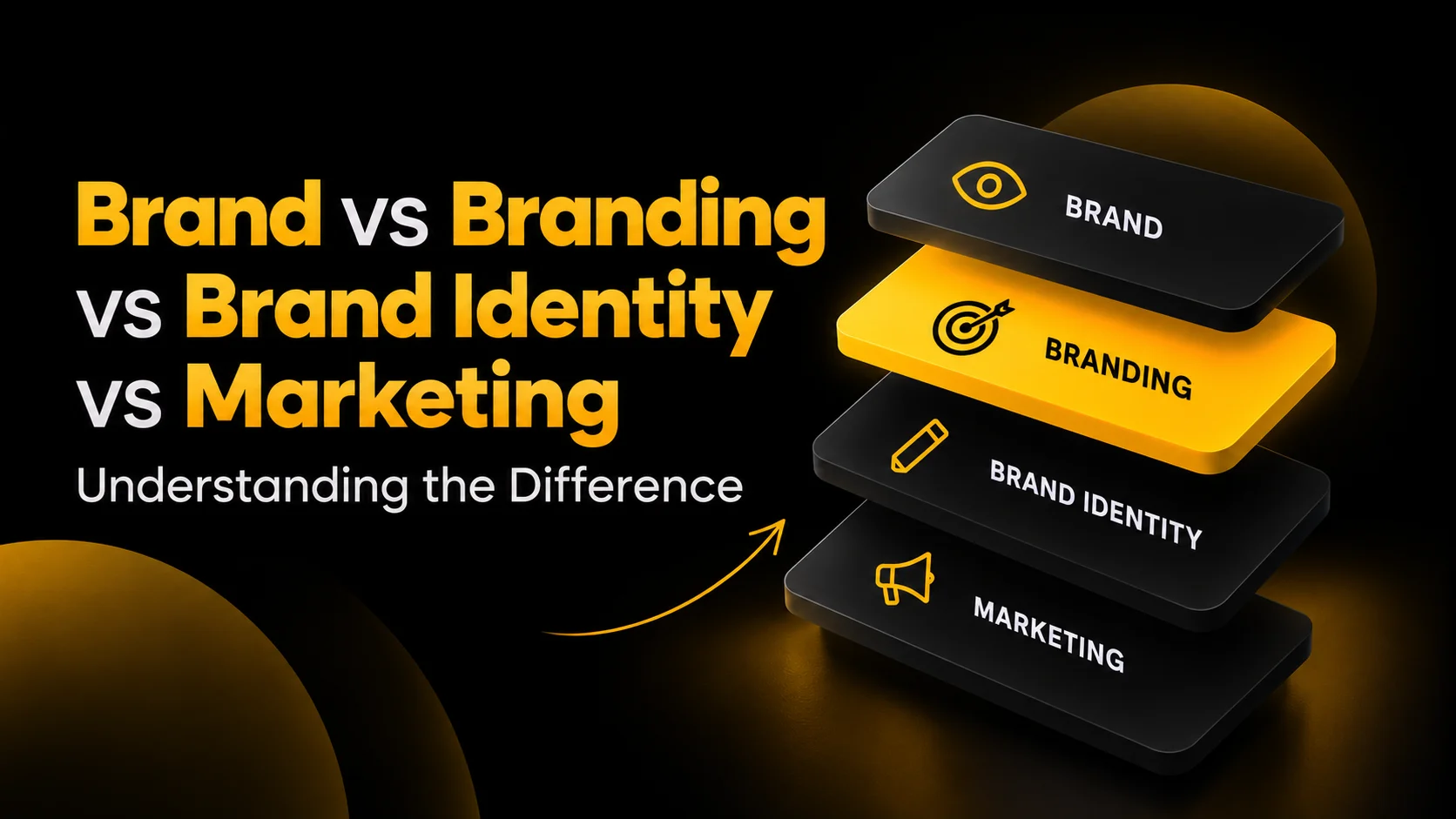
This is also where it becomes important to understand the relationship between brand and marketing. A brand influences how people perceive and remember a business, while marketing communicates its value and helps influence customer behaviour. For a clearer explanation, read the difference between brand, branding, brand identity, and marketing.
When positioning is unclear, marketing communication tends to become generic. Businesses may talk about quality, affordability, innovation, or customer satisfaction without explaining what those claims mean for a specific audience.
A stronger position gives every channel a more consistent and meaningful message to communicate.
3. Communication: Making the Value Understandable
Having a valuable product or service is not enough if potential customers do not understand its relevance to their situation.
Marketing communication translates the business's value into a message the target audience can recognise and understand. It connects features to benefits, explains why those benefits matter, and gives people a reason to pay attention.
The same underlying value proposition can be communicated differently across channels. A search advertisement may address an immediate need, an article may explain a complex problem, and a social media post may demonstrate expertise or build familiarity.
Although the format changes, the central message should remain aligned with the business's positioning and the audience's needs.
When each channel communicates a different or contradictory promise, customers may struggle to understand what the business actually stands for.
4. The Offer: Giving People a Reason to Act
Even relevant communication can fail to produce results if the offer does not make sense to the intended customer.
An offer is more than a discount. It includes what the customer receives, how the value is packaged, what it costs, what risks or uncertainties are involved, and what the next step requires.
For example, an advertisement may successfully attract business owners who need a website. However, if the landing page does not explain the scope, benefits, process, or expected outcome of the service, visitors may hesitate to enquire.
Increasing the advertising budget will not necessarily resolve that hesitation.
The offer must make the next step sufficiently relevant, understandable, and worthwhile for the target customer.
Why Good Digital Marketing Execution Still Fails
When results fall short, it is tempting to assume that the channel or its execution is the problem. Sometimes it is. But strong execution cannot always overcome weaknesses in the underlying marketing decisions.
Good Ads, Weak Offers
A paid campaign can have strong creative, accurate targeting, and a competitive click-through rate while producing few conversions.
The advertisement may be doing its job: attracting attention and generating interest. The problem may arise after the click, when visitors discover that the offer does not meet their expectations, lacks a clear value proposition, or requires too much commitment.
Before changing the campaign, examine the landing page, the offer, the audience's expectations, and the conversion process.
Strong SEO, Poor Search Intent Alignment
High search rankings do not guarantee business outcomes. A page can attract organic traffic while failing to address the intent behind the search.
Someone looking for a definition may not be ready to purchase a service. Someone comparing providers may need evidence, pricing information, or a clear explanation of differences. Someone ready to buy may need a direct route to the relevant product or service.
Effective SEO connects the searcher's intent with the page's content and the next useful step. Rankings and traffic matter, but their business value depends on relevance.
Consistent Content, Unclear Positioning
Publishing frequently can increase visibility, but volume alone does not establish a distinctive position in the market.
If content repeatedly covers broad topics without expressing a clear perspective, demonstrating relevant expertise, or addressing a specific audience's needs, it may be difficult for people to understand why they should follow or trust the business.
The objective should not simply be to publish more. It should be to create content that reinforces the business's positioning and helps the intended audience make better decisions.
A Practical Framework: Value, Relevance, Trust, and Action
One way to evaluate marketing strategy across different channels is to examine four connected factors: value, relevance, trust, and action.
Value
Does the business offer something that matters to the target customer? Can it explain the problem it solves and the benefit it delivers?
If the value is unclear, marketing communication may generate attention without creating meaningful preference.
Relevance
Does the message address the audience's actual needs, priorities, and stage in the decision-making process?
A useful message delivered to the wrong audience, or at the wrong moment, may still produce poor results.
Trust
Does the business give people sufficient reason to believe its claims? Trust can be supported by relevant case studies, credible reviews, transparent information, demonstrated expertise, and a consistent customer experience.
The appropriate evidence depends on the service, the audience, and the perceived risk of making a decision.
Action
Is the next step clear and proportionate to the customer's level of interest? Can people easily enquire, compare options, request a proposal, or complete a purchase?
Unclear calls to action, unnecessary form fields, confusing navigation, and unexpected costs can introduce friction between interest and conversion.
These four factors are connected. Value gives people a reason to care, relevance makes the message meaningful, trust reduces uncertainty, and a clear next step helps turn interest into action.
They also provide a useful way to diagnose performance problems without assuming that every issue begins with the channel.
Digital Marketing and Traditional Marketing Are Not Competing Strategies
Digital and traditional marketing are often discussed as though they represent fundamentally different approaches to marketing. In practice, they are different ways to reach, influence, and serve audiences.
Digital channels can offer rapid distribution, detailed measurement, targeting options, and opportunities to test variations. Traditional channels may provide different forms of reach, visibility, context, or audience engagement.
Neither category is automatically superior. Their usefulness depends on the business objective, audience behaviour, available resources, message, and buying process.
A business should not choose digital channels simply because they are measurable, just as it should not choose traditional channels because they are familiar. It should evaluate which combination of channels is most appropriate for the situation.
The strategy defines the objective and the logic behind the marketing effort. Channel selection determines how that strategy is put into practice.
A Better Way to Diagnose Marketing Performance
When a campaign underperforms, avoid immediately assuming that the platform needs to change. Work through the underlying decisions in a logical order.
1. Clarify the Business Objective
Identify the outcome the marketing activity is expected to support. Is the priority awareness, qualified leads, sales, repeat purchases, or another measurable business result?
Without a clear objective, it is difficult to decide which metrics matter or whether a campaign is succeeding.
2. Examine Customer Demand
Check whether the audience has the need or motivation the campaign assumes. Review customer questions, search behaviour, sales conversations, competitor alternatives, and other relevant evidence.
Distinguish between a lack of demand, weak demand, and a failure to reach people who already have demand.
3. Evaluate Positioning and the Offer
Ask whether the business provides a compelling reason to choose it. Check whether the offer matches the audience's expectations and whether its value is communicated clearly.
If the proposition is weak or generic, improving targeting alone is unlikely to solve the problem.
4. Check Message and Audience Alignment
Confirm that the message addresses the right audience and matches its level of awareness and intent. A person exploring a problem may need useful information, while someone comparing providers may need proof, clarity, and differentiation.
5. Identify Friction in the Customer Journey
Review the steps between initial contact and the desired action. Look for confusing information, inconsistent promises, unnecessary complexity, technical issues, or a lack of credible evidence.
Consider the complete journey rather than treating the advertisement, website, and sales process as unrelated activities.
6. Test a Specific Hypothesis
Once the likely cause is identified, make a focused change and define how its impact will be evaluated.
For example, if visitors are engaging with an advertisement but not submitting enquiries, test whether the landing page communicates the offer clearly and addresses the audience's main concerns. Compare meaningful outcomes rather than relying on a single surface-level metric.
This approach makes optimisation more disciplined. Instead of changing several variables at once, the marketer can learn which assumption was correct and which needs further investigation.
Tools Matter, but Their Role Is Different
None of this means that platforms, technology, analytics, or technical execution are unimportant. SEO fundamentals, campaign structure, tracking quality, website performance, creative production, and audience targeting can all materially affect results.
The distinction is that tools support marketing decisions; they do not replace the need to make them.
Analytics can show where users drop off, but interpretation is needed to understand why. Keyword research can reveal search demand, but strategy determines which opportunities fit the business. Advertising platforms can identify audiences and optimise delivery, but the offer and positioning still influence whether the resulting attention becomes a meaningful business outcome.
Technology improves a marketer's ability to execute, observe, and refine. Its value depends on how effectively it serves the broader objective.
Conclusion: Better Marketing Starts with Better Decisions
Digital marketing is not simply a collection of channels to manage. It is the application of marketing principles in an environment where businesses can reach audiences, distribute messages, and measure behaviour in increasingly sophisticated ways.
SEO, paid advertising, social media, email, and content marketing all have a role to play. But the choice of channel should follow a clear understanding of customer demand, business positioning, communication, and the offer.
When marketing fails, changing platforms may be necessary, but it should not be the automatic response. First, identify where the problem actually exists: demand, relevance, trust, the offer, the customer journey, or channel execution.
The most useful question is not simply, “Which channel should we use next?” It is, “What do we need to understand or change to make our marketing more effective?”
That is the difference between managing digital marketing activities and building a marketing strategy.